
How We Calculate
How we calculate explains the formulas, constants and rounding used by every MicroCoulomb converter: unit factors from the SI Brochure and NIST, single-phase and three-phase power formulas, and how results are rounded. Each converter shows its formula under the result so you can check the arithmetic yourself.
Unit conversion factors
Factors come from the SI definitions (BIPM, The International System of Units, 9th edition, 2019) and NIST Special Publication 811.
| Conversion | Factor | Source |
|---|---|---|
| 1 µC to C | 10⁻⁶ C | SI prefix micro |
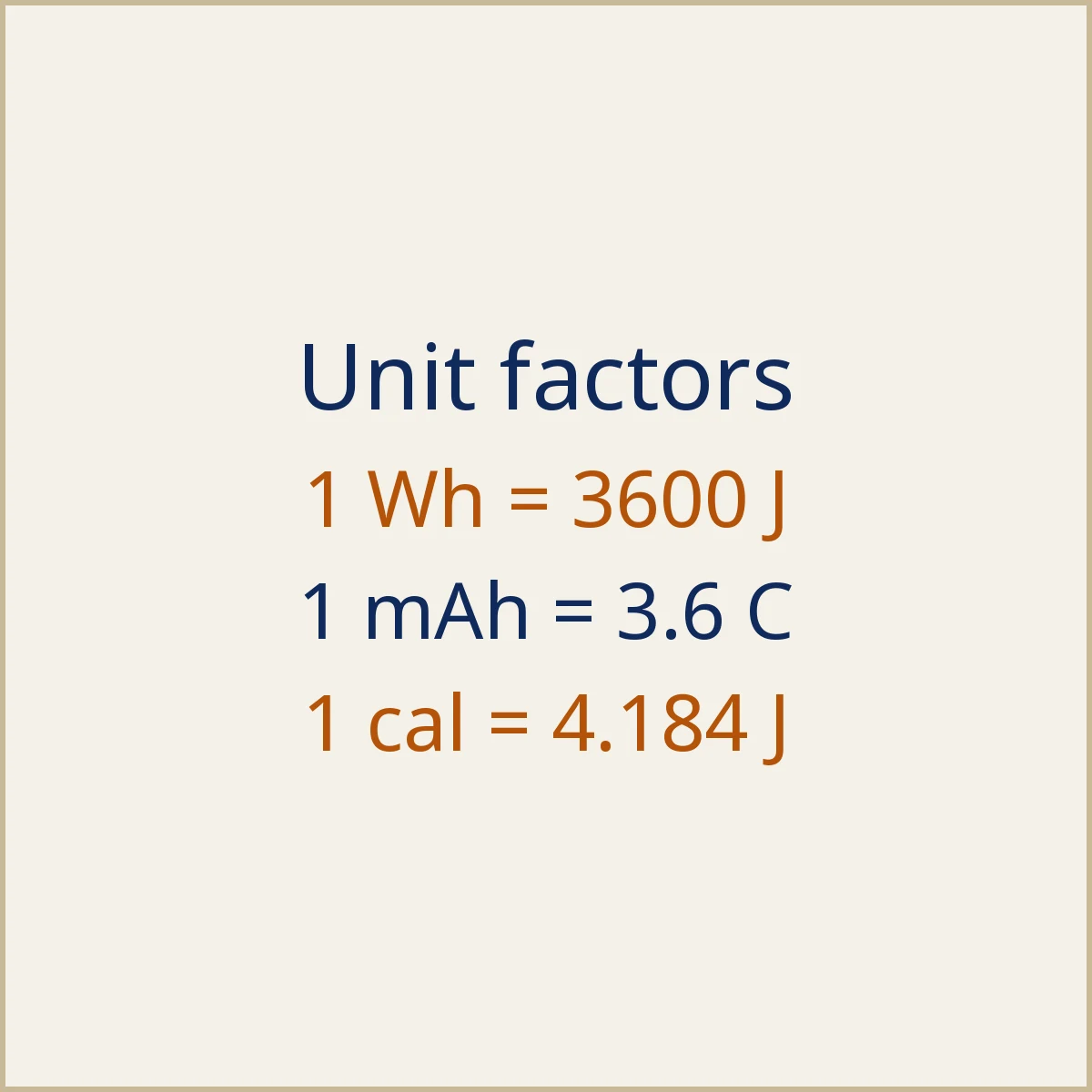
| 1 mAh to C | 3.6 C (0.001 A × 3600 s) | SI definitions of ampere, second, hour |
| 1 Wh to J | 3600 J | SI definitions |
| 1 kWh to J | 3.6×10⁶ J | SI definitions |
| 1 eV to J | 1.602176634×10⁻¹⁹ J | SI 2019 (exact) |
| 1 cal (thermochemical) to J | 4.184 J | NIST SP 811 |
| 1 hp (mechanical) to W | 745.6998715822702 W | NIST SP 811 |
| 1 BTU/h (IT) to W | 0.29307107017 W | NIST SP 811 |
Power and current formulas
| Circuit | Power | Current |
|---|---|---|
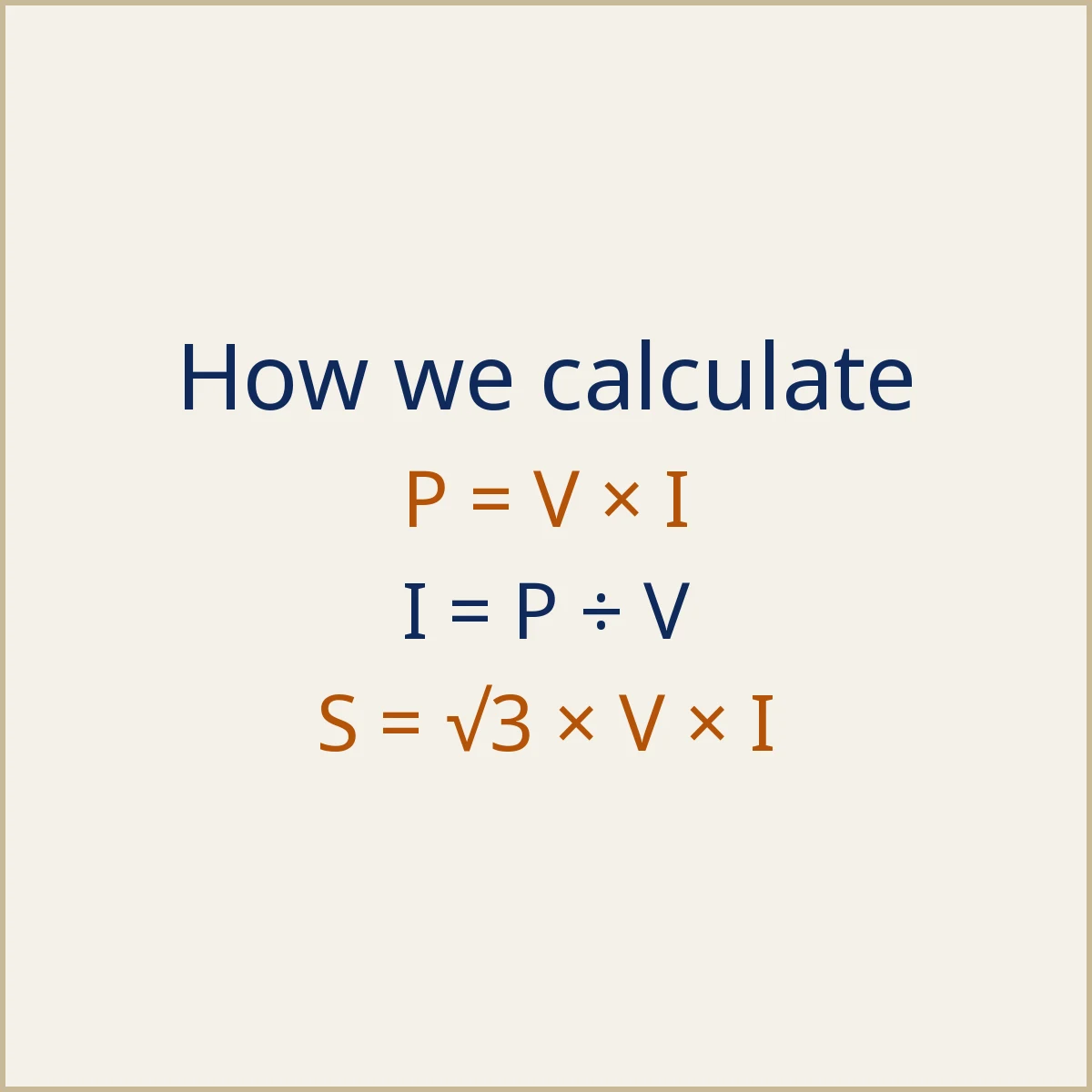
| DC | P = V × I | I = P ÷ V |
| AC single-phase | P = V × I × PF | I = P ÷ (V × PF) |
| AC three-phase (line-to-line) | P = √3 × VL × I × PF | I = P ÷ (√3 × VL × PF) |
| Apparent power, single-phase | S = V × I | I = S ÷ V |
| Apparent power, three-phase | S = √3 × VL × I | I = S ÷ (√3 × VL) |
Rounding
Results are computed in double-precision floating point and shown rounded to six decimal places. Very small or very large results are shown in scientific notation, such as 2.5×10⁻⁴, so that no significant digits are lost. Copying a result copies the rounded value. Who writes and reviews these pages is described on the about page.
What the calculators assume
- Voltage and current are RMS values.
- Three-phase formulas use the line-to-line voltage and a balanced load.
- Power factor is a number from 0 to 1 that you enter; the site does not estimate it.
- Results are theoretical and not a wiring recommendation; follow the NEC and a licensed electrician.
Reporting a problem
If a result does not match your own calculation, send the inputs and the result you expected through the contact page or the comments on the page, and the editors will recheck it. The converters themselves are on the MicroCoulomb home page.
Frequently asked questions
Where do the unit factors come from?
From the BIPM SI Brochure, 9th edition (2019), and NIST Special Publication 811.
How are results rounded?
To six decimal places, with scientific notation for very small or large values.
Do the calculators work for unbalanced three-phase loads?
No. They assume a balanced load and line-to-line voltage.
Updated